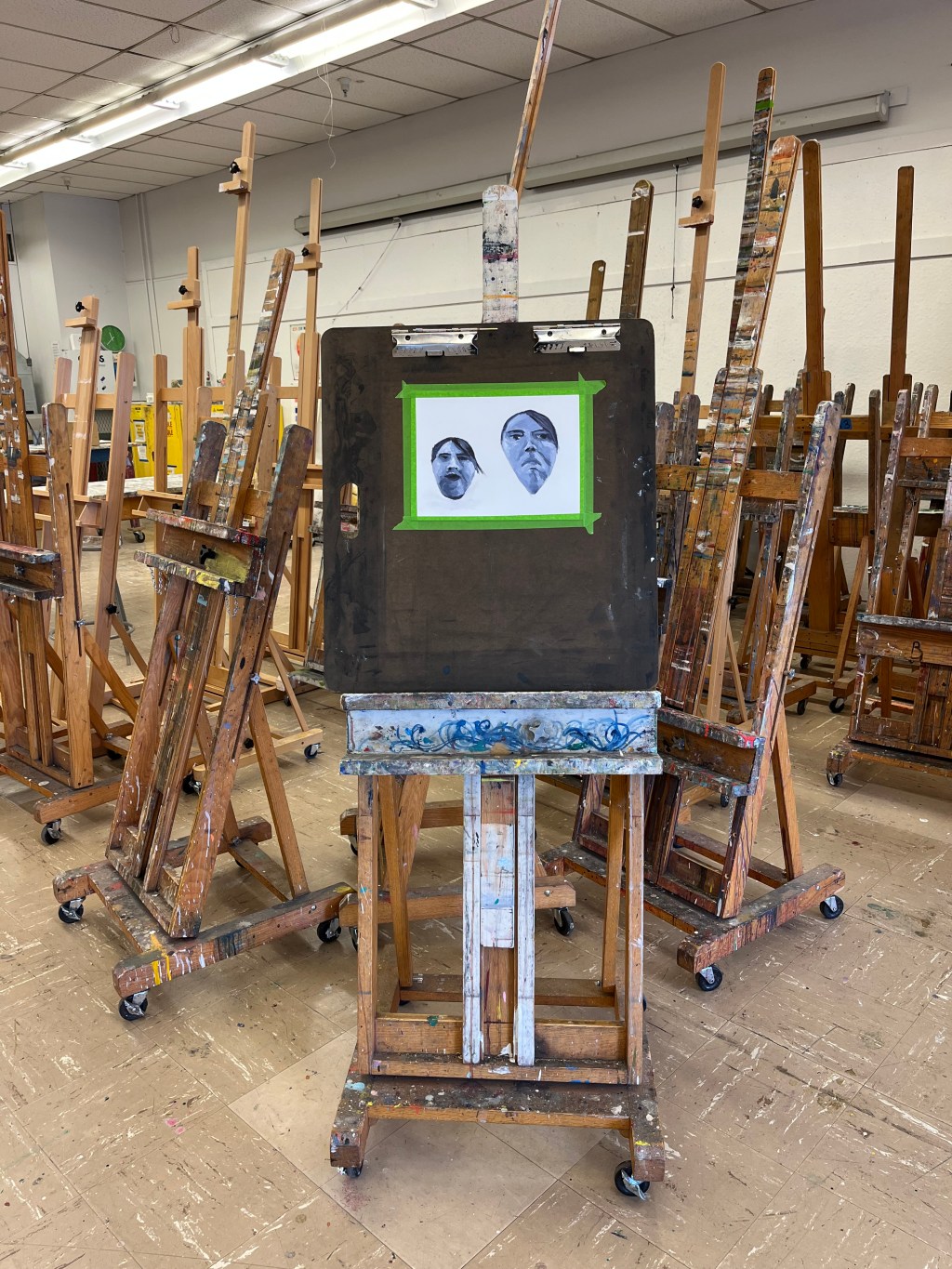
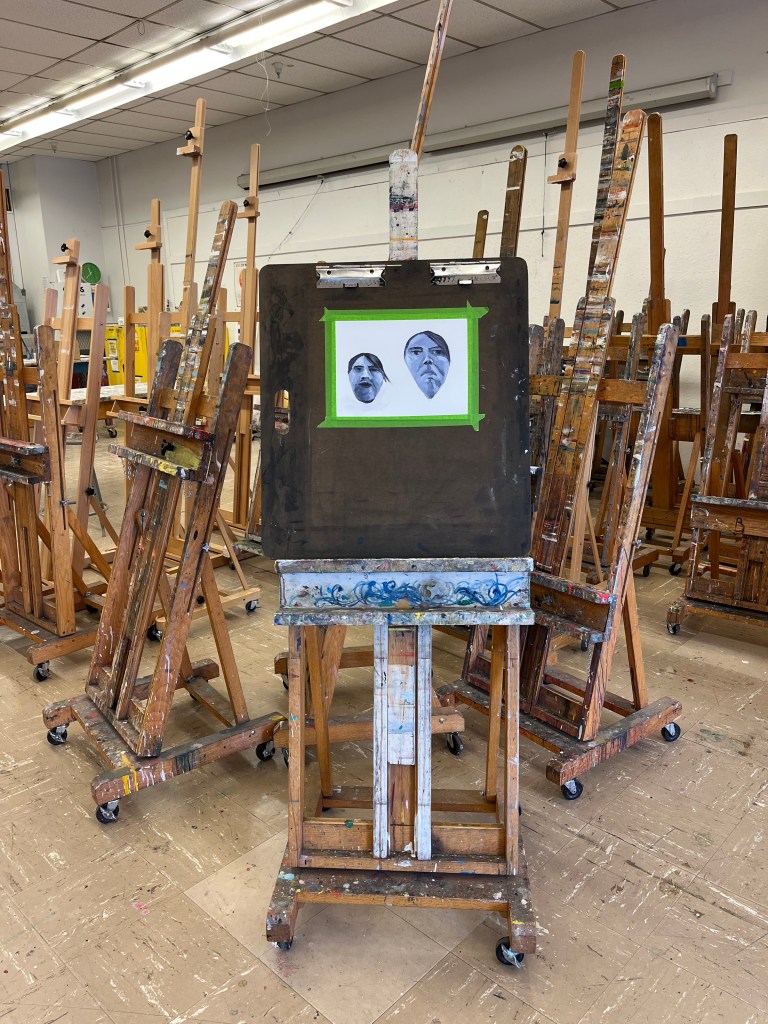
After years of self-study, I started a five-week art class last week—four days a week in the studio. There’s a structure and rhythm to it, and something in me settled in as soon as I stepped into it. It felt good and oddly familiar, like slipping into something that had been waiting for me all along.
I didn’t really expect to feel so at home so quickly. The space itself, the smell of paint, the ebb and flow of quiet concentration broken by friendly conversation of the people working next to me—all of it felt like a world I already belonged to. On Thursday, we got homework I didn’t have time to finish in class, so I went back to the studio on Friday and spent two hours alone, finishing up. I just sank into that silence, totally at ease. I’ve always known I tend to move at a slower pace than others, and I’ve built a simpler life to reflect that need I have for just less. Working with that rhythm and just making progress without being rushed felt deeply right.
That doesn’t mean the week was easy. Tuesday started with a value scale exercise: nine steps from white to black, using just those two colors and a palette knife. I’ve done this before, and every time it brings up tension. There’s something about it that hits a nerve—perfectionism, control, the desire to get it “right.” This time was no different.
I mixed a “black” that leaned too purple. My midtone didn’t feel right. I got paint outside the lines. I hated the inaccuracy of the palette knife. At one point I switched to a smaller one, thinking that might help—only to ‘realize’ I was just be bad with all of them. (Really? You can do literally no right with any palette knife on earth?) And while I was still wrestling with the values, almost everyone else had already moved on to their self-portraits.
It was the perfect storm for my inner critic to show up with gems like these:
- “Other people are already done. You’re behind.”
- “That’s not black. That’s purple.”
- “You’re wasting paint trying to get the black right. You’re not good at this.”
It’s a humbling exercise, especially for someone whose perfectionism likes to rear its head when you should just be learning. Eventually, I reminded myself: every color has a value, even lime green. So if my scale leaned purple, fine. If I needed longer than everyone else to get there, so be it. I’ve always been willing to put in the time. That matters.
Critique on Thursday was, surprisingly, a real high point. We shared our distorted self-portraits with the class—distorted faces painted while we held reflective objects up to see ourselves. Some people used several brushes and even though their portraits were distorted, they definitely leaned into realism. Meanwhile, I hadn’t even thought to change brushes. Never even crossed my mind. I painted with just one for the entire exercise. The result was loose, expressive, and textured. More impressionistic than realistic, and I really liked it. Others seemed to, too. I would’ve welcomed more constructive critique, but the positive feedback felt good—it also just felt good to have people to share with, letting myself and my work be seen. The work was definitely imperfect, in-process, and totally mine. There was something freeing about that. No hiding or posturing. Just showing up as I was, where I was in my current skill level.
One other confirming moment came in recognizing just how much of what we’re being taught in class overlaps with what I’ve already learned through independent study. It’s affirming to realize that the consistent work I’ve been doing on my own has taken root. At the same time, I found myself wishing more of the class material felt new. This is a short container, and I want to make the most of it. But maybe that’s part of the point: to return to the foundations and to really deepen them.
I’m also learning to listen more carefully to my inner critic—not to believe everything it says, but to notice what it might point to. “There’s still so much work to do,” it says. And yes, of course there is. There always will be. Even artists who’ve been working for decades say that. This is the work, and there’s always more. The real challenge isn’t in noticing the gap between where I am and where I want to be (that’s actually the easy part . . .), but in not letting that gap define anything important about the work and how it can evolve. The better questions are: Am I showing up? Am I growing?
This week, I did. I am.
Excited to start week 2 tomorrow—we’ll be doing textured still life studies, and I have a feeling this is going to be fun.
 It's Henley